
Dejar un mensaje
Si está interesado en nuestros productos y desea conocer más detalles, deje un mensaje aquí, le responderemos lo antes posible.

Many gravel and mountain bike riders struggle to choose between tubeless and tubed wheels. This article compares tubeless and tubed bike wheels from weight, puncture resistance, maintenance and cost aspects, explains their suitable riding scenarios, and helps you pick the right wheel setup for your cycling adventures.
What Are Tubeless and Tubed Bike Wheels?
Tubed wheels are the traditional solution. They use an inner tube inside the tire to hold air pressure. The inner tube seals air, and the tire provides outer protection. This system has been widely used for decades, easy to understand and repair.
Tubeless wheels remove the inner tube completely. The tire and rim form an airtight seal together, with liquid sealant inside the tire to block small holes automatically. Modern carbon bike rims are mostly tubeless-ready, becoming a popular upgrade for off-road cyclists.
Main Advantages of Tubeless Bike Wheels
First, better puncture protection. When sharp thorns or small rocks pierce the tire, the sealant flows out and plugs the hole instantly. Most small punctures won’t cause sudden air loss, so riders can keep riding without stopping immediately.
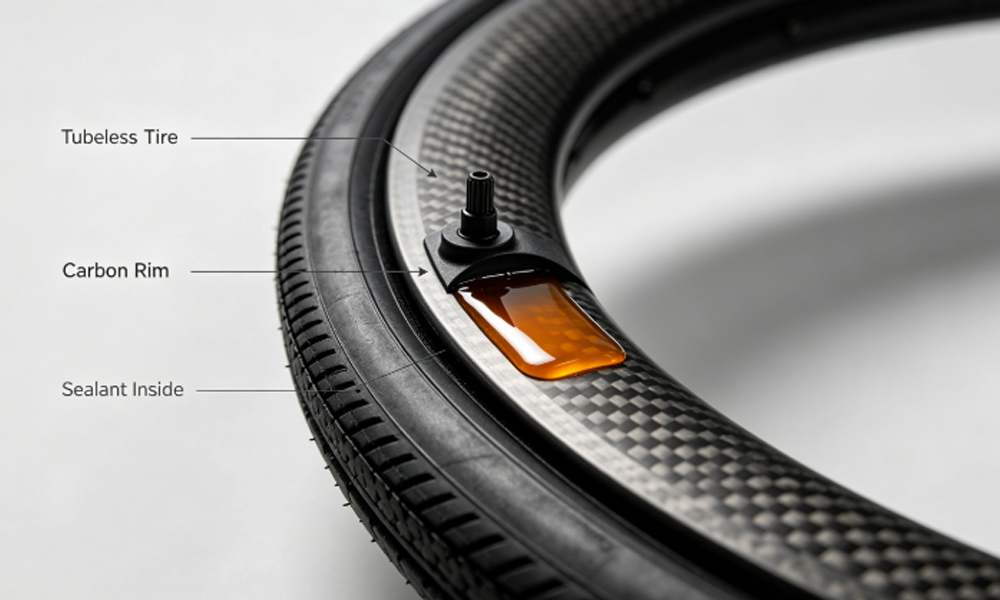
Second, lower rolling resistance. Tubeless systems allow riders to run lower tire pressure. Lower pressure improves tire contact with rough terrain, increases grip on loose gravel, mud and rocky trails. It also absorbs minor bumps for a smoother ride.
Third, weight saving. A tubeless setup can cut the extra weight of inner tubes, especially noticeable when using lightweight carbon wheels. Less rotating weight brings better acceleration performance.
Downsides of Tubeless Wheel Systems
Tubeless setups demand higher maintenance. The sealant will dry out after several months and needs regular replacement. Tire installation is trickier; sometimes it takes effort to get the tire seated properly and achieve airtight sealing.
Cost is another drawback. Tubeless-ready rims, dedicated tubeless tires and sealant all cost more than standard tubes and regular rims. If you frequently get large tire cuts, tubeless cannot fix big damage and you still need to carry a spare tube as backup.
Pros and Cons of Traditional Tubed Wheels
The biggest strength of tubed wheels is simplicity and low cost. Inner tubes are cheap and easy to buy globally. Repair is straightforward: when you get a flat tire, replace or patch the tube quickly. For beginners or casual riders, troubleshooting requires no special skills.
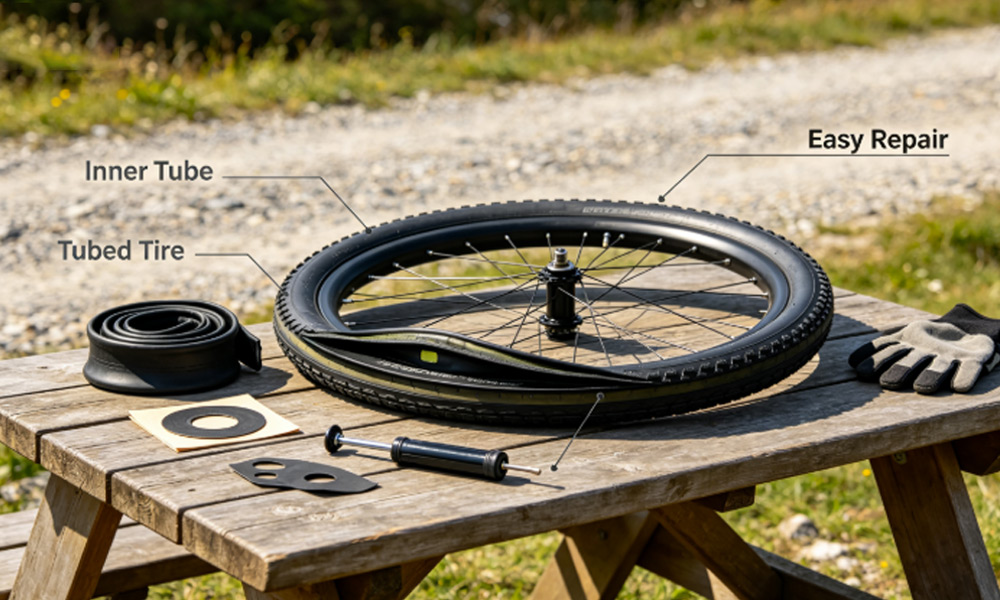
However, inner tubes are easier to suffer pinch flats. When hitting hard rocks, the tube gets squeezed between the tire and rim, creating snake bite punctures. Tubed tires also need higher air pressure, which reduces traction on uneven trails.
How to Choose Between Tubeless and Tubed Wheels
Pick tubeless wheels if you mainly ride gravel trails, mountain singletracks, and long-distance off-road cycling. You value grip, fewer flat tires and better riding comfort, and you are willing to do regular maintenance.
Choose tubed wheels if you are a casual city rider, short-distance leisure cyclist, or you prefer minimal maintenance. It is also ideal for riders with a tight budget or those who travel to remote areas where tubeless supplies are hard to find.
Final Recommendations
There is no one-size-fits-all winner between tubeless and tubed wheels. For professional off-road enthusiasts, tubeless carbon wheels are a worthy upgrade. For entry-level riders, tubed wheels remain a reliable and economical starting point. If you are looking for high-quality tubeless-ready carbon bicycle rims and wheelsets, check our product collection.
Q1: Can I convert my existing tubed carbon wheels to tubeless?
A: It depends on your rim model. Only tubeless-ready rims support conversion. Ordinary non-tubeless rims cannot form a reliable air seal. Check your rim specification before conversion.
Q2: How often should I replace tubeless sealant?
A: Normally every 6–12 months. Hot weather speeds up evaporation. You should inspect and refill sealant regularly.
Q3: Will tubeless tires go completely flat with large cuts?
A: Yes. Sealant only works for small holes. Large tears still lead to air leakage, so bringing a spare inner tube for emergency use is still recommended.
Q4: Are tubeless wheels suitable for road bikes?
A: Many modern road carbon wheels support tubeless. Road tubeless helps reduce puncture risk and improve comfort, though many road riders still stick with tubed setups.


 IPv6 RED SOPORTADA
Dejar un mensaje
Escanear a WeChat :

Escanear a WhatsApp :